Jul 21, 2026
Club life
5 min read
The coffee is the point
Clubs that sit down together after the run keep their members about twice as long as clubs that scatter at the finish. The run gets people there. The twenty minutes after is the club.
Desmond Quaye
Club success
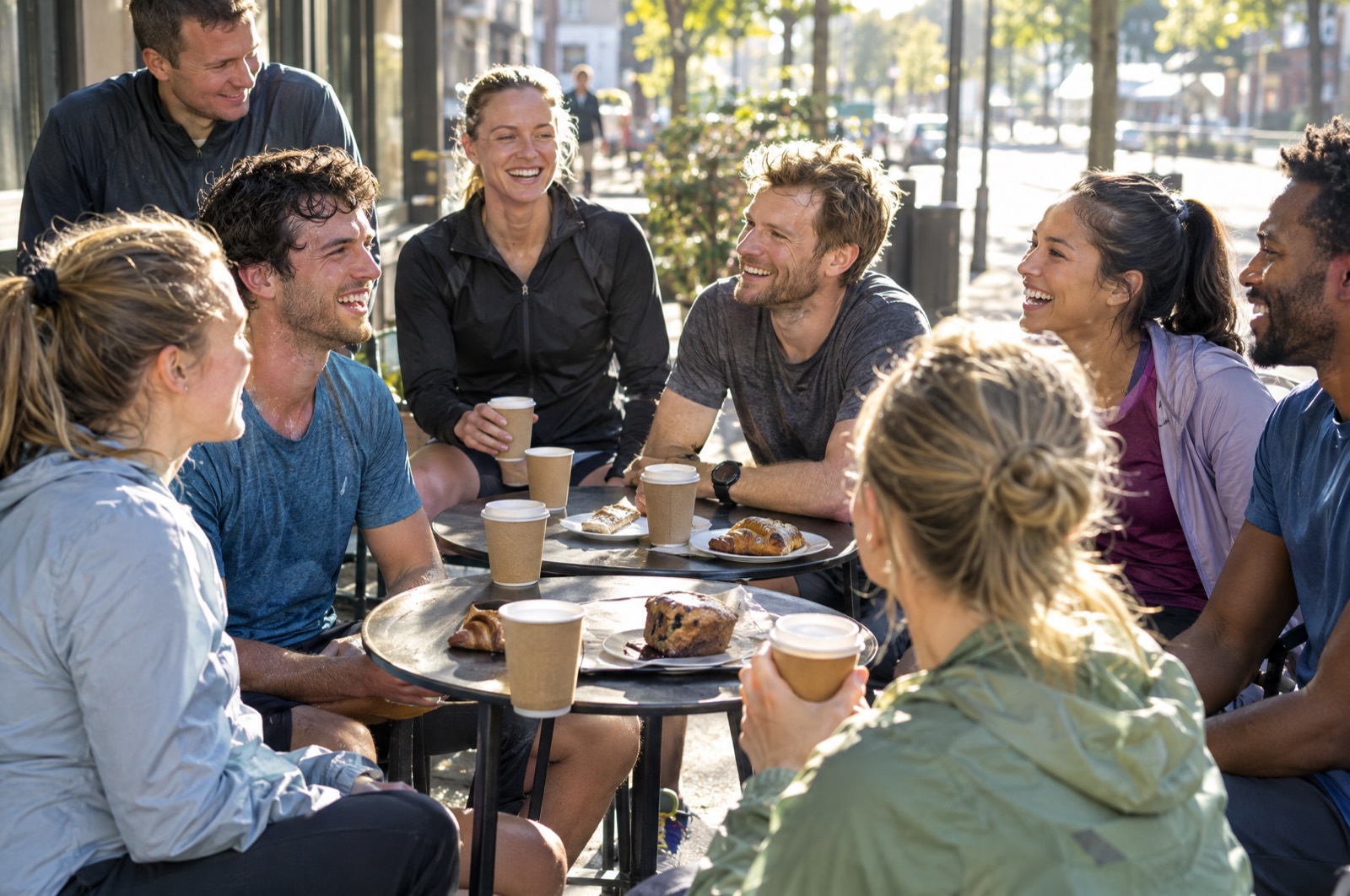
There is a number we did not expect to find. Some clubs add a second pin to their run cards, a place to go afterward: a coffee shop, a bakery, a bench with a view and someone's thermos. Members of those clubs are still checking in six months later at about twice the rate of clubs whose runs end at the finish line.
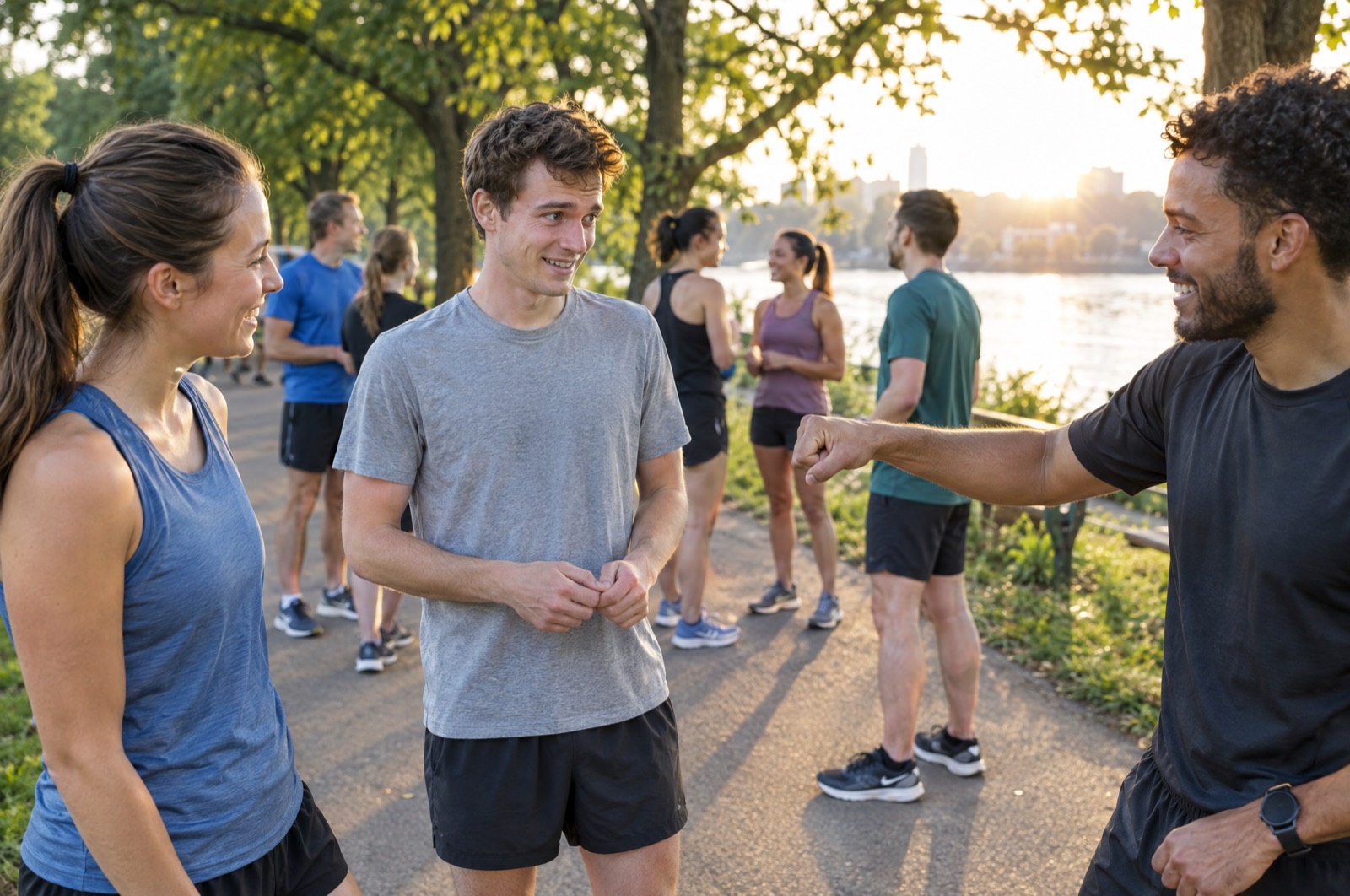
It is not the caffeine. It is that a run, on its own, is not very social. You are breathing hard, you are next to one or two people, and half the group you never see at all because they are a kilometer ahead or behind. The run is the reason to turn up. The twenty minutes after it is where a group of people who exercise near each other turns into a club.
Pick the place first
When I started leading in Baltimore we chose routes and then looked for somewhere nearby that was open. That is backward. Choose the place and draw the loop so that it ends at the door.
What makes a good one:
- Open early. If the run finishes at 8:00 and the doors open at 8:30, half the club has gone home.
- Room outside. Thirty people in running clothes are not what a small cafe wants at its tables. A sidewalk, a wall or a patch of grass is better for everyone.
- Something cheap. Not everyone wants to spend six dollars every Saturday. A place with drip coffee and day-old pastries keeps it open to all of them.
Then go and talk to whoever runs it. A club that brings thirty customers every Saturday at a quiet hour is a gift, and most owners will meet you halfway: a few reserved tables, a jug of water by the door, a tolerance for people stretching on the sidewalk.
Make it part of the run
Put the second pin on the card, with the time you expect to be there. People plan around it. Someone who cannot run this week because of a sore knee will still come for the coffee, and that person is still a member.
The member who comes only for the coffee this month is the member who is running again next month.
The groups mix here, or nowhere
Pace groups are the right way to run and the wrong way to sit. The fast group will take one table and the walk-run group another unless someone breaks it up. Leads should split themselves across the tables, and the simplest trick we have seen is a club in Columbus where the lead of the fastest group always sits with the last group to arrive.
If there is no cafe
Not every start line has a cafe within walking distance at 8:30 on a Saturday. Clubs on trailheads and in parks bring the coffee to the finish instead: two flasks, a sleeve of paper cups and a folding table in the trunk of whoever lives closest. One club in Boise rotates the flasks through its members, and the person on flask duty that week is, by their own account, never late.
What to do with the twenty minutes
Almost nothing. Say next week's route out loud. Welcome the first-timers by name; the recap has them listed. Mention anyone on a long streak. Then leave people alone to talk about anything other than running.
A club is the thing people would miss if the running stopped. Build that part on purpose.
Pacer, for run leads
Post Saturday's run in ten minutes
Route, pace groups and the meeting point in one card, and members say yes from a link. Free up to 40 members.
Start your club